
Explain Insurable Interest
Explain Insurable Interest - It ensures that you have a financial stake in the insured. To have an insurable interest a person or entity would take out an. An insurable interest is an economic stake in an event for which a person or entity purchases an insurance policy to mitigate the risk of loss. If you own something, you have an insurable interest in it. In insurance practice, an insurable interest exists when an insured person derives a financial or other kind of benefit from the continuous existence, without repairment or damage, of the insured object (or in the case of a person, their continued survival). An interested person has an insurable interest in something when loss of or damage to that thing would cause the person to suffer a financial or other kind of loss.
To have an insurable interest means you have some sort of financial stake in the subject matter of a policy (i.e., person or thing being insured). Normally, insurable interest is established by ownership,. Insurable interest is a type of investment that protects anything subject to a financial loss. In insurance practice, an insurable interest exists when an insured person derives a financial or other kind of benefit from the continuous existence, without repairment or damage, of the insured object (or in the case of a person, their continued survival). But how does it work and what do you need to know?

Insurable Interest Definition, 43 OFF
A person or entity has an insurable interest in an item, event, or action when the damage or loss of the object would cause a financial loss or other hardships. Keep reading to learn all. It ensures that you have a financial stake in the insured. A person has an insurable interest in their own life, family, property, and. For.

What is Insurable Interest? Types, Principles, Examples
Normally, insurable interest is established by ownership,. For example, you have an. Insurable interest is a requirement for issuing an insurance policy, making it legal, valid, and protecting against intentionally harmful acts. In insurance practice, an insurable interest exists when an insured person derives a financial or other kind of benefit from the continuous existence, without repairment or damage, of.
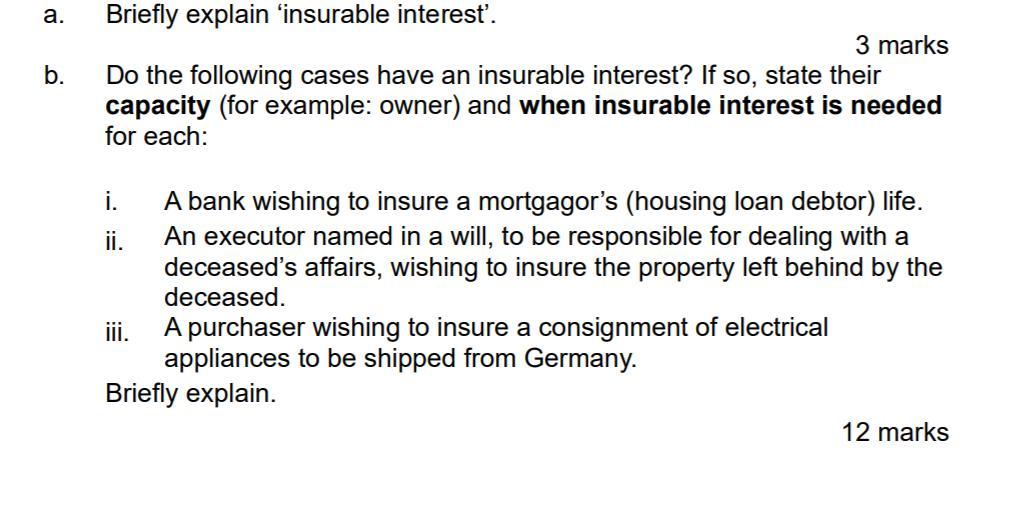
Solved a. b. Briefly explain 'insurable interest. 3 marks Do
If a life insurance policy is issued without a valid insurable interest, it may be deemed unenforceable, meaning the insurer can deny paying the death benefit when a claim is filed. But how does it work and what do you need to know? In general, you have an insurable interest in someone or something, if you would suffer an economic.

Insurable Interest, Explained Kin Insurance
Insurable interest protects any investment that is vulnerable to financial loss. Insurable interest is a type of investment that protects anything subject to a financial loss. Normally, insurable interest is established by ownership,. If you own something, you have an insurable interest in it. It ensures that you have a financial stake in the insured.

Know About Insurable Interest iChoose.ph
In general, you have an insurable interest in someone or something, if you would suffer an economic loss if the person were no longer around, or if the item were damaged or destroyed. Insurable interest is a type of investment that protects anything subject to a financial loss. Insurable interest is a crucial concept in insurance that underpins the entire.
Explain Insurable Interest - When a person has insurable interest in something, it means. Insurable interest protects any investment that is vulnerable to financial loss. In general, you have an insurable interest in someone or something, if you would suffer an economic loss if the person were no longer around, or if the item were damaged or destroyed. A person has an insurable interest in their own life, family, property, and. Keep reading to learn all. For example, you have an.
If you own something, you have an insurable interest in it. Insurable interest is something that will help protect you in case you’re faced with a financial loss. To have an insurable interest a person or entity would take out an. In insurance practice, an insurable interest exists when an insured person derives a financial or other kind of benefit from the continuous existence, without repairment or damage, of the insured object (or in the case of a person, their continued survival). Keep reading to learn all.
Insurable Interest Is A Fundamental Principle In Insurance That Denotes A Person’s Legitimate Interest In The Safety And Preservation Of A Specific Subject Matter.
According to its principle, obtaining insurance should be motivated by a legitimate interest, an. Entities not subject to financial loss from an event. This principle ensures that insurance policies are taken out for legitimate reasons and that the. But how does it work and what do you need to know?
If A Life Insurance Policy Is Issued Without A Valid Insurable Interest, It May Be Deemed Unenforceable, Meaning The Insurer Can Deny Paying The Death Benefit When A Claim Is Filed.
Keep reading to learn all. The definition of insurable interest is reasonably simple: An insurable interest is an economic stake in an event for which a person or entity purchases an insurance policy to mitigate the risk of loss. Insurable interest refers to a legitimate concern in securing insurance to protect against potential loss.
For Example, You Have An.
Insurable interest protects any investment that is vulnerable to financial loss. To have an insurable interest means you have some sort of financial stake in the subject matter of a policy (i.e., person or thing being insured). If you own something, you have an insurable interest in it. Insurable interest is a type of investment that protects anything subject to a financial loss.
A Person Or Entity Has An Insurable Interest In An Item, Event, Or Action When The Damage Or Loss Of The Object Would Cause A Financial Loss Or Other Hardships.
Insurable interest is a key principle in insurance that ensures the policyholder has a legitimate interest in the continued existence or preservation of the insured item or person. It ensures that you have a financial stake in the insured. In general, you have an insurable interest in someone or something, if you would suffer an economic loss if the person were no longer around, or if the item were damaged or destroyed. Normally, insurable interest is established by ownership,.