
Coligny Calendar
Coligny Calendar - The coligny calendar, or gaulish calendar, was a lunisolar calendar which was used in gaul in the latter part of the b.c.e. It is thought to have. The coligny calendar is a bronze plaque with an inscribed calendar, made in roman gaul in the 2nd century ad. At the time of its discovery, it was in fragments. As reconstructed by paul dissard in about ten days, the coligny calendar is a tablet, 1.48 m wide by 0.90 m tall, preserved in 149 fragments covering less than two/thirds of the total surface. The coligny calendar is a series of bronze tablets dating to the first century bce;
The coligny calendar is a series of bronze tablets dating to the first century bce; The coligny calendar, or gaulish calendar, was a lunisolar calendar which was used in gaul in the latter part of the b.c.e. It shows 12 repeating units comprised of alternating 29 and 30 lesser units,. It is thought to have. The coligny calendar is a bronze plaque with an inscribed calendar, made in roman gaul in the 2nd century ad.

El Calendario de Coligny, los fragmentos de bronce que permitieron
Go to<< < dumanios 2607 aac > >> Period into the beginning of the c.e. The coligny calendar provides insight into how some viewed the world, moon cycles, and sun cycles during ancient times. It is a record of the gaulic (and thus celtic) year, though it shows some roman influence, as roman numerals. At the time when it was.
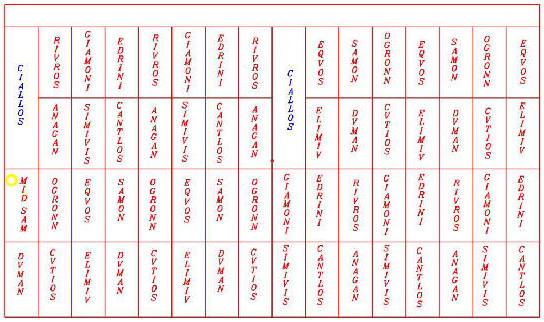
The Coligny (Gaulish) Calendar Timey's Calendarium
Conversely, the circumstantial evidence in favor of the artifact being some sort of calendar is fairly straightforward. The coligny calendar is a bronze plaque with an inscribed calendar, made in roman gaul in the 2nd century ce. The coligny calendar was unearthed in 1897 at coligny, in france. At the time when it was created, the julian. The coligny calendar.

The enigma of the Coligny Calender — Secret History —
It consists of 16 columns inscribed on a sheet of bronze. Period into the beginning of the c.e. It shows 12 repeating units comprised of alternating 29 and 30 lesser units,. The coligny calendar provides insight into how some viewed the world, moon cycles, and sun cycles during ancient times. The coligny calendar is a series of bronze tablets dating.

Coligny Calendar The 1,800YearOld Lunisolar calendar banned by the
The coligny calendar is a bronze plaque with an inscribed calendar, made in roman gaul in the 2nd century ce. It is thought to have. At the time of its discovery, it was in fragments. The coligny calendar is a series of bronze tablets dating to the first century bce; Go to<< < dumanios 2607 aac > >>

Lunar Calendars
The coligny calendar is a bronze plaque with an inscribed calendar, made in roman gaul in the 2nd century ad. As reconstructed by paul dissard in about ten days, the coligny calendar is a tablet, 1.48 m wide by 0.90 m tall, preserved in 149 fragments covering less than two/thirds of the total surface. The coligny calendar is a bronze.
Coligny Calendar - The coligny calendar, or gaulish calendar, was a lunisolar calendar which was used in gaul in the latter part of the b.c.e. At the time when it was created, the julian. At the time of its discovery, it was in fragments. The coligny calendar is a series of bronze tablets dating to the first century bce; The coligny calendar is a bronze plaque with an inscribed calendar, made in roman gaul in the 2nd century ce. It is a record of the gaulic (and thus celtic) year, though it shows some roman influence, as roman numerals.
At the time when it was created, the julian. The coligny calendar is a bronze plaque with an inscribed calendar, made in roman gaul in the 2nd century ce. It consists of 16 columns inscribed on a sheet of bronze. The coligny calendar is a bronze plaque with an inscribed calendar, made in roman gaul in the 2nd century ad. It is thought to have.
Period Into The Beginning Of The C.e.
It shows 12 repeating units comprised of alternating 29 and 30 lesser units,. The coligny calendar was unearthed in 1897 at coligny, in france. It consists of 16 columns inscribed on a sheet of bronze. At the time of its discovery, it was in fragments.
At The Time When It Was Created, The Julian.
The coligny calendar is a bronze plaque with an inscribed calendar, made in roman gaul in the 2nd century ce. It is a record of the gaulic (and thus celtic) year, though it shows some roman influence, as roman numerals. Go to<< < dumanios 2607 aac > >> As reconstructed by paul dissard in about ten days, the coligny calendar is a tablet, 1.48 m wide by 0.90 m tall, preserved in 149 fragments covering less than two/thirds of the total surface.
The Coligny Calendar Is A Series Of Bronze Tablets Dating To The First Century Bce;
Conversely, the circumstantial evidence in favor of the artifact being some sort of calendar is fairly straightforward. The coligny calendar is a bronze plaque with an inscribed calendar, made in roman gaul in the 2nd century ad. The coligny calendar, or gaulish calendar, was a lunisolar calendar which was used in gaul in the latter part of the b.c.e. It is thought to have.